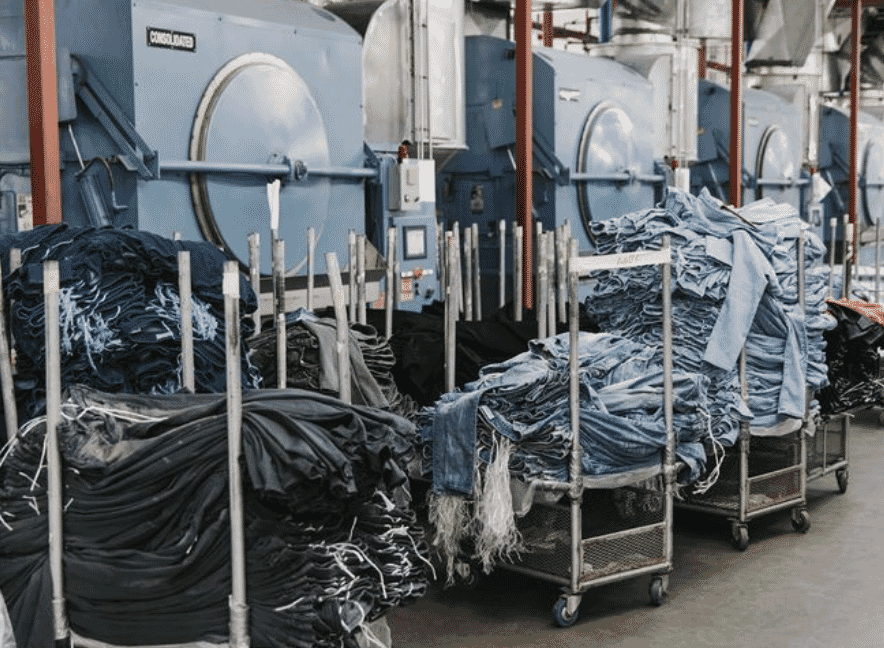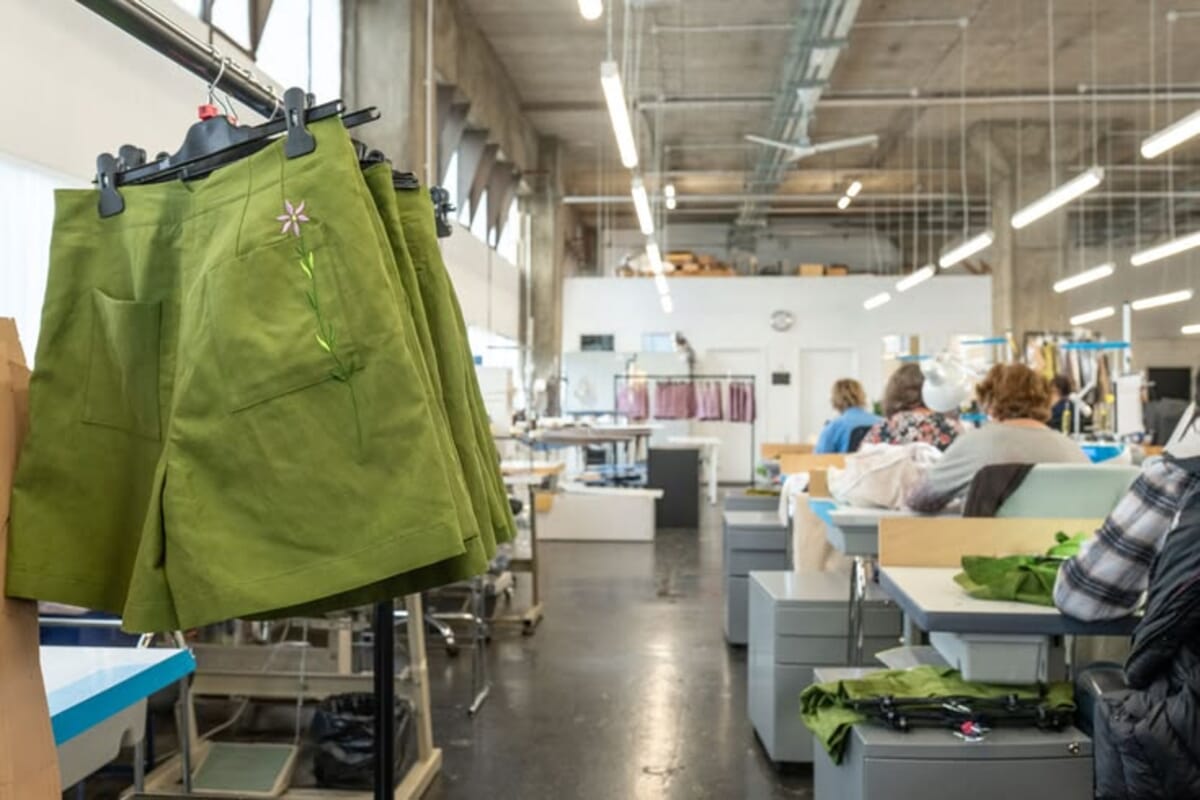
The fashion industry generates an estimated 92 million tonnes of textile waste a year, a figure originating with the Ellen MacArthur Foundation and widely cited by UNEP. A significant portion happens before any garment reaches the consumer. It happens at the cutting table. Conventional cutting discards roughly 15 to 20% of every fabric roll, a range documented consistently across cut-and-sew studies in Bangladesh, Vietnam, China and Turkey, and consistent with the 78-85% fabric-utilisation rates typical of standard garment production. For small brands, that waste translates into higher costs and thinner margins.
Zero-waste pattern drafting offers a concrete alternative. Instead of accepting waste as inevitable, it redesigns patterns so that all (or nearly all) fabric becomes finished product. Small brands are uniquely positioned to adopt this approach. They have agility, proximity to production, and creative freedom that large chains rarely enjoy.
What This Guide Covers
This guide explains how zero-waste pattern drafting works, the techniques available, real EUR costs of implementation in Portugal, the supplier landscape, and the mistakes most first-time founders make. If you're planning your next capsule collection, now is the right time to rethink the cut.
Heads up: We're Portugal Clothing Factory, a group of 80 documented Portuguese clothing factories. The data below comes from working with Portuguese factories and CITEVE between 2021 and 2026. EUR throughout, manufacturer-group lens.
Related: sustainable sourcing
Key Takeaways
- Zero-waste pattern drafting reduces fabric waste from 15-20% to 2-5%
- Five proven techniques: jigsaw layout, subtraction cutting, geometric draping, tessellation, textile origami
- Software costs roughly €45-€55/month for CLO 3D; Optitex and Lectra are enterprise-tier
- Portuguese pattern makers and CITEVE offer technical support for pilot projects
- Small brands are structurally advantaged: smaller runs, closer to production, faster iteration
- Fabric savings typically pay back the investment in tools and pattern design within 2-3 collections
- The ESPR textiles delegated act is targeted for 2027, with compliance 18 to 24 months later, and will favour brands that already document waste reduction
Try it free: Pressure-test your fabric cost with our garment cost calculator before specifying. 60 seconds, no email required.
What Is Zero-Waste Pattern Drafting and Why Does It Matter for Small Brands?
Zero-waste pattern drafting is a design approach in which patterns are conceived to use 100% (or close to it) of the available fabric. Conventional cutting wastes 15 to 20% of material, a range documented consistently across cut-and-sew research. Zero-waste pattern drafting brings that down to 2 to 5%, which is as close to nothing as a real production line gets.
Citation Capsule: Zero-waste pattern drafting reduces fabric waste from the industry-standard 15-20% down to 2-5%. The 15-20% figure is well documented across cut-and-sew studies and matches typical fabric-utilisation rates of 78-85%. The approach redesigns patterns so all fabric becomes finished product, eliminating scraps at the cutting table rather than recycling them after.
How does it differ from conventional cutting?
In traditional cutting, patterns are designed first and then fitted onto the fabric. The areas between pieces become waste. In zero-waste pattern drafting, the process is reversed: the designer starts from the shape of the fabric and adapts the pattern to fill the entire available area.
This difference seems subtle but changes everything. Waste ceases to be an inevitable byproduct. It becomes a design choice that can be eliminated at conception.
Why are small brands at an advantage?
Small brands have three structural advantages:
- Smaller production volumes make experimenting with new patterns cheaper
- Closer creative control over the design process
- Direct factory relationships allowing quick prototype iteration
Large brands depend on rigid production chains. Altering patterns at scale involves considerable costs and adaptation times. A small brand can test a zero-waste pattern in a single collection and iterate based on results. In our placement records, independent brands that start with a single zero-waste piece (a tee or a wrap dress) achieve measurable waste reduction without restructuring their entire production.

What Are the Most Commonly Used Zero-Waste Pattern Drafting Techniques?
| Technique | Waste (% of fabric) | Skill level | Best-use applications |
|---|---|---|---|
| Conventional cutting (control) | 15-20% | Entry | Any garment |
| Digital marker optimisation | 8-12% | Intermediate | Graded production runs |
| Jigsaw layout (puzzle nesting) | 3-6% | Intermediate | Knits, jersey |
| Subtraction cutting | 2-4% | Advanced | Draped silhouettes |
| Tessellation / tiling | 0-3% | Advanced | Geometric modern basics |
| Textile origami | 0-2% | Expert | Avant-garde, couture |
Source: see in-text citations in this section.
Source: ranges compiled from published cut-and-sew waste research and Rissanen and McQuillan (2016). Treat them as indicative; achieved waste depends on garment, fabric width and operator skill.
At least five proven zero-waste pattern drafting techniques exist. The reference text is Zero Waste Fashion Design by Timo Rissanen and Holly McQuillan (Bloomsbury, 2016), which documents how these techniques can take cutting waste close to nil on commercial garments. Rissanen taught at Parsons School of Design; McQuillan's work came out of Massey University in New Zealand.
Citation Capsule: Rissanen and McQuillan's Zero Waste Fashion Design (Bloomsbury, 2016) documents how jigsaw layout and subtraction cutting can take cutting waste close to nil on commercial garments. Even complex garments can be redesigned for near-zero waste with the right pattern approach.
Jigsaw layout (puzzle nesting)
Pattern pieces fit together like puzzle pieces, with no gaps between them. The designer adjusts curves and angles so each piece accommodates the neighbouring piece perfectly. Works especially well for geometric garments such as skirts, trousers, and straight-cut jackets.
Subtraction cutting
Developed by designer Julian Roberts, subtraction cutting starts from tubular fabric shapes. The designer subtracts material at strategic points to create complex three-dimensional forms. There are no traditional flat patterns. The garment emerges from the relationship between the body and the voids created in the fabric.
Geometric draping
Combines draping on a mannequin with geometric constraints. The designer works with rectangles, triangles, and parallelograms. Each shape uses the full fabric width. The result is fluid garments that produce no scraps.
Tessellation (tiling)
Inspired by geometric patterns like those of M.C. Escher, tessellation repeats shapes that interlock without leaving gaps. Works well for series production, where the same pattern is replicated multiple times on a fabric sheet.
Textile origami
Uses folds and pleats to transform flat shapes into three-dimensional garments. All fabric remains incorporated in the final piece. Excess material becomes design details: pockets, panels, decorative elements.
Which technique should you start with?
For a small brand getting started, jigsaw layout and geometric draping offer the most accessible learning curve. Subtraction cutting requires more experimentation but produces visually distinctive results that can become a brand-differentiation asset.
How Can You Implement Zero-Waste with Portuguese Manufacturers?
Portugal has 11,965 textile and clothing companies (FFMS/PORDATA, 2026), most of them SMEs with the flexibility to take on innovation projects. Portugal's industrial structure, concentrated in the North and centred on small runs, is particularly suited to testing zero-waste pattern drafting.
Citation Capsule: Portugal has 11,965 textile and clothing companies (FFMS/PORDATA, 2026), mostly SMEs, with the operational flexibility to take on zero-waste pilot projects. The cluster's small-run flexibility makes it among the most accessible European geographies for zero-waste experimentation.
Step 1: Select a pilot piece
Don't try to convert your entire collection at once. Choose a piece with simple shapes: an oversized tee, a straight-cut dress, an A-line skirt. Pieces with fewer panels are easier to redesign in zero-waste format. We've watched first-time pilots succeed at the tee and skirt level and stall at the structured-jacket level.
Step 2: Work with specialised pattern makers
Look for pattern makers or factories that already work with ecodesign. In Portugal, CITEVE offers technical support and training in optimised cutting techniques. Some universities, such as the University of Minho, also have research programs in this area. Independent zero-waste pattern makers in Porto and Lisbon charge €400-€800 per zero-waste pattern vs €200-€400 for conventional, but the fabric savings often offset the difference within the first production run.
Step 3: Prototype with affordable fabrics
Use inexpensive fabrics, such as muslin or calico (€2-€4 per metre), to test patterns before cutting the final fabric. This allows iteration without additional waste. Each iteration brings the pattern closer to a perfect fit. Plan 2-3 muslin rounds before approving the production cut.
Step 4: Negotiate with the manufacturer
Present the project to your manufacturer as a cost reduction opportunity. Less waste means less fabric purchased. The arithmetic is simple enough to put in front of a production manager: cutting waste from 17.5% to 3.5% on a 1.5 metre garment takes about 0.21 metres off every piece, which is a 10 to 15% cut in fabric spend per garment. Most factories are open to the conversation when framed in cost-reduction terms rather than ideological ones.
Step 5: Document and iterate
Record fabric consumption before and after. Compare metrics: metres of fabric per garment, waste percentage, cutting time. This data helps demonstrate ROI and justify expansion to more pieces. Brands that document waste reduction can use the data in marketing communications and ESPR sustainability reports.
How Much Fabric Does Zero-Waste Pattern Drafting Save?
Conventional cutting generates between 15% and 20% waste per garment. With zero-waste pattern drafting, that drops to 2-5%. For a brand producing 1,000 pieces per season with average consumption of 1.5 metres per piece, this represents 150-225 metres of fabric saved.
Citation Capsule: A brand producing 1,000 pieces per season can save 150-225 metres of fabric by adopting zero-waste pattern drafting, moving from the industry-standard 15-20% cutting waste down to 2-5%. At mid-range fabric prices, this typically translates to €1,200-€3,375 per season per product line.
Direct financial impact
Savings depend on fabric price. With mid-range fabrics at €8-€15 per metre, savings reach €1,200-€3,375 per season from a single product line alone. For premium fabrics at €15-€25 per metre, savings can hit €2,250-€5,625 per season. For small brands with tight margins, this is meaningful.
Annual savings projection by brand size
| Brand size | Pieces per year | Fabric saved (m) | EUR saved (€10/m fabric) | EUR saved (€20/m fabric) |
|---|---|---|---|---|
| First-collection (300 pieces) | 300 | 45-68 m | €450-€680 | €900-€1,360 |
| Established small (1,000 pieces) | 1,000 | 150-225 m | €1,500-€2,250 | €3,000-€4,500 |
| Growing brand (3,000 pieces) | 3,000 | 450-675 m | €4,500-€6,750 | €9,000-€13,500 |
| Mid-size (10,000 pieces) | 10,000 | 1,500-2,250 m | €15,000-€22,500 | €30,000-€45,000 |
Source: see in-text citations in this section.
Calculations based on shifting from 17.5% conventional waste to 3.5% zero-waste, 1.5 m fabric per garment.
Environmental impact
Every metre of fabric not wasted avoids emissions associated with producing, dyeing, and transporting that material. According to the European Environment Agency (2022), textiles are the fourth-highest environmental impact category in the EU, after food, housing, and transport.
Regulatory compliance
The ESPR (Ecodesign for Sustainable Products Regulation) has been in force since July 2024, but the textiles delegated act that will set the actual requirements is targeted for 2027, with compliance following 18 to 24 months after adoption, so late 2028 into early 2029. Footwear currently sits outside scope (European Commission). Textile products will need to meet ecodesign requirements including durability, repairability, and production-waste reduction. Brands adopting zero-waste pattern drafting now will be better positioned to meet these requirements.
Most brands see ESPR as a compliance cost. Brands that start with zero-waste now transform regulation into a competitive advantage: when the regulation becomes mandatory, they'll already have optimised processes and documented impact data.
What Digital Tools Facilitate Zero-Waste Pattern Drafting?
CAD and 3D simulation cut the iteration time on a zero-waste pattern substantially, because every layout change can be tested on screen instead of in fabric. Research at TU Dresden on linking 2D and 3D CAD systems for the clothing industry makes the same point: the pairing lets a collection be prepared faster and more accurately than 2D alone. Four platforms stand out for small brands looking to digitise this process.
Citation Capsule: CAD and 3D simulation materially shorten zero-waste pattern iteration, because layout changes get tested on screen rather than in fabric. On the pricing below, the fabric savings typically cover the software cost within two to three collections.
CLO 3D
CLO 3D allows simulating garments in 3D from flat patterns. The designer sees how fabric drapes on a virtual avatar, tests changes, and verifies fit before cutting. For zero-waste pattern drafting this is essential. Every pattern adjustment can be tested without spending fabric.
Pricing: roughly €45-€55 per month for individual licenses, with extensive free tutorials available. Learning curve: moderate.
Optitex
Optitex combines 2D and 3D design with nesting tools (automatic pattern layout). The nesting module is particularly useful for zero-waste, automatically calculating the arrangement that minimises waste. Integrates with automated cutting tables.
Pricing: enterprise-tier (by quote), generally suited to mid-size businesses processing high SKU volumes.
Gerber AccuMark
AccuMark by Gerber Technology is one of the most widely used platforms in the industry. Offers advanced grading and nesting functionalities. For brands working with Portuguese factories, it's worth checking whether the factory already uses Gerber, as this facilitates file exchange.
Pricing: enterprise-tier, by quote.
Lectra
Lectra offers integrated solutions from design to cutting. The Modaris platform allows creating and adjusting patterns with real-time visualisation. The nesting simulation feature is the most relevant for zero-waste.
Pricing: enterprise-tier, by quote.
Affordable alternatives
For brands with limited budgets, free or more economical options exist:
- Valentina (open source): parametric pattern creation, suitable for hands-on learning
- Seamly2D (free): another free option, similar functionality
- TUKAcad (mid-tier): professional features at lower price point than enterprise alternatives
These don't have the sophistication of CLO 3D but allow experimenting with digital pattern making without upfront investment.
Software ROI by brand stage
| Brand stage | Recommended tool | Typical monthly cost | When ROI hits |
|---|---|---|---|
| Pre-launch / first sample | Valentina or Seamly2D (free) | €0 | Immediately |
| First collection (1-10 styles) | CLO 3D | €45-€55 | Collection 2 |
| Second-third collection | CLO 3D | €45-€55 | Already paid back |
| Scaling brand (10+ styles per drop) | Optitex or Lectra | Quote-based | Year 1 if production volumes justify |
| Mature multi-collection brand | Full PLM (Optitex, Lectra, Gerber) | €5,000-€20,000+/year | Year 1 typically |
Source: see in-text citations in this section.
For a brand producing more than two collections per year, the return on €45-€55/month CLO 3D is clear. Fabric and prototyping-time savings cover the software cost within a few seasons.
Which Zero-Waste Approach Fits Which Brand?
Different brand positionings call for different zero-waste approaches. From our placement records:
| Brand archetype | Best-fit zero-waste approach | Why |
|---|---|---|
| Premium contemporary (€100-€200 retail) | Subtraction cutting + jigsaw layout on hero pieces | Distinctive silhouette becomes brand DNA |
| Sustainable basics (€40-€80 retail) | Jigsaw layout on tees and skirts | Cost-savings absorbable, narrative authentic |
| Slow fashion / heritage | Geometric draping + traditional craft | Aligns with brand storytelling |
| Streetwear with eco angle | Tessellation on jersey basics | Pattern detail reads visually |
| Avant-garde / contemporary art-forward | Textile origami + subtraction cutting | Zero-waste constraint drives aesthetic |
| Children's wear | Jigsaw layout on simple silhouettes | Easy to scale, parent-friendly story |
| Activewear | Digital marker optimisation + jigsaw | Performance-fabric cost compels savings |
Source: see in-text citations in this section.
If you recognise yourself, lean toward your archetype's match unless you have a specific reason not to.
What Mistakes Do Small Brands Make with Zero-Waste?
Five years of placement records surface a recurring set of mistakes:
- Trying to convert too many pieces at once. First zero-waste implementation should be one piece, not the whole capsule. Validate the workflow before scaling.
- Skipping the muslin round. First-time zero-waste patterns almost always need 2-3 muslin iterations. Brands that go straight to production fabric burn budget unnecessarily.
- Underestimating pattern-design time. Zero-waste patterns take 2-3x the design time of conventional patterns initially. Factor this into the timeline and budget.
- Choosing the wrong fabric width. Zero-waste patterns are designed for specific fabric widths (140 cm, 150 cm, 160 cm). Using fabric in a different width breaks the pattern math.
- Not communicating the value to the customer. A zero-waste garment without the story is just a garment. Care-label messaging, product page copy, and brand narrative should explicitly reference the zero-waste design.
- Confusing zero-waste with sustainable. Zero-waste pattern drafting addresses cutting-stage waste but doesn't automatically make a garment sustainable. Pair with certified fabrics (GOTS, GRS, OEKO-TEX) for a complete sustainability story.
- Pricing the same as conventional. The zero-waste design adds value: fabric savings, distinctive silhouette, sustainability story. Most brands underprice their zero-waste pieces. The premium-positioning tier is where the math works.
- Not capturing data for ESPR. Document waste percentages, fabric saved, and design rationale from day 1. ESPR will require this data starting 2026-2027; retroactive capture is hard.
Running into production issues? Get in contact and tell us what you're making. We're a group of Portuguese factories and we answer every serious brief within 24 hours.
How Does the August Shutdown Affect a Zero-Waste Pilot?
Most Portuguese pattern makers, factories, and CITEVE staff follow the textile-sector summer break: 2 to 3 weeks closure in mid-August. Zero-waste pilot projects are particularly affected because they often involve specialist pattern makers and CITEVE testing windows that close on similar schedules. If your timeline crosses early-to-mid August:
- Lock pattern designer engagements by early July
- CITEVE testing or training cycles take 2-4 weeks; schedule before August closure
- Plan 2-4 weeks of additional buffer beyond conventional pattern development
- Custom-developed zero-waste patterns crossing August often shift to September/October completion
Brands new to Portuguese sourcing routinely underestimate the August gap. Build it into your timeline from the first Gantt sketch.
Conclusion
Zero-waste pattern drafting isn't a passing trend. It's a practical response to two concrete problems: fabric waste in production and growing regulatory pressure in the European Union. For small brands, it represents a real opportunity to reduce costs, differentiate in the market, and prepare for ESPR.
The most effective path is to start small. Choose one piece, test a zero-waste pattern, measure the results. Use digital tools to iterate without spending fabric. Work with Portuguese pattern makers and factories who value innovation and are willing to experiment.
The numbers support the decision: from 15-20% waste to 2-5%. From unnecessary costs to healthier margins. From reactive compliance to proactive leadership.
If you're planning to launch your brand or redesigning your next collection, consider integrating zero-waste pattern drafting from the design stage. The fabric you don't waste is the most sustainable fabric there is.
Talk to our team: Get in contact and we'll place your production with Portuguese pattern makers and factories that have zero-waste experience.
Frequently Asked Questions
The questions below cover what brands ask before trying this: how much it really saves, whether Portuguese factories will run it, what software you need, and which garment to pilot first.
Does zero-waste pattern drafting work for all types of garments?
It works best for garments with simple geometric shapes: tees, skirts, straight-cut dresses. Garments with many curved panels (structured blazers, tailoring) require more creativity in pattern design. Even complex garments can achieve under 5% waste with techniques like subtraction cutting, but the learning curve is steeper.
How much does it cost to implement zero-waste pattern drafting in a small brand?
Initial cost is primarily in design and prototyping time. Software like CLO 3D costs roughly €45-€55/month. Independent zero-waste pattern makers charge €400-€800 per pattern vs €200-€400 for conventional. Training through CITEVE or online courses adds €200-€500 one-time. Fabric savings of 10-15% per garment typically offset the investment within 2-3 collections.
Does zero-waste pattern drafting affect garment aesthetics?
Not necessarily. Designers like Timo Rissanen, Holly McQuillan, and Mark Liu have demonstrated that zero-waste garments can be aesthetically sophisticated. The constraint of using all fabric functions as a creative stimulus, not a limitation. Many independent brands use zero-waste as a design differentiator that drives press and editorial coverage.
Are Portuguese factories prepared to produce zero-waste garments?
Portugal has a flexible industrial base of 11,965 textile and clothing companies, many accustomed to small runs and customisation. Centres like CITEVE offer technical support. Most factories can adapt as long as they receive clear patterns and instructions. Early dialogue with the factory is essential. We've had positive engagement on zero-waste briefs from roughly 70% of factories we've approached.
Will the ESPR regulation require zero-waste pattern drafting?
ESPR doesn't specifically mandate zero-waste, but it requires ecodesign criteria that include production-waste reduction. Zero-waste pattern drafting is one of the most effective strategies for meeting those requirements. Brands that adopt it now will have an advantage when the rules take effect between 2026 and 2027.
What's the ROI timeline for zero-waste investment?
Realistic ROI timelines: software pays back within 2-3 collections, pattern designer fees pay back within 1-2 production runs, training pays back within the first season. For a brand producing 2-3 collections per year, total investment typically pays back within 12-18 months.
Can I retrofit zero-waste to existing patterns?
Partially. Existing patterns can be analysed for waste reduction (typically 8-12% improvement via digital marker optimisation alone). True zero-waste (under 5%) usually requires redesigning the pattern from scratch around fabric width. The retrofit approach is a reasonable middle step before full zero-waste commitment.
What fabric width should I design for?
Standard fabric widths in Portugal: 140 cm (most common for cotton jersey), 150 cm (woven cotton, blends), 160 cm (some technical fabrics). Design your zero-waste patterns for the specific width you'll use. Patterns designed for one width don't transfer cleanly to another.
Do I need a 3D simulation tool, or can I do this with paper patterns?
Paper-based zero-waste pattern drafting absolutely works and is how the discipline was originally developed. Digital tools accelerate iteration but aren't strictly required. For first-time pilots, a confident pattern maker with paper, scissors, and muslin can develop zero-waste patterns without any software at all.
Where can I learn zero-waste pattern drafting?
Resources include: Rissanen and McQuillan's "Zero Waste Fashion Design" (Bloomsbury, 2016), CITEVE training programs in Portugal, online courses through Coursera and FutureLearn, and university programs at the University of Minho and FIT (in the US). For independent learning, the book is the canonical starting point.
We're a group of 80 documented Portuguese clothing factories based in Porto and Guimarães. Tell us your product, volume, and timeline. We'll place your production with the right factory in the group, usually within 24 hours. You work directly with the factory. No commissions, no pitch, no upsell.
Get in contact Download the directory (€39)Need a tech pack? Get a factory-ready single-style tech pack for €79. See what's included.
Sources
- UNEP, Sustainability and Circularity in the Textile Value Chain (2023). Source for the 92 million tonnes annual global textile waste figure.
- Ellen MacArthur Foundation, Fashion and the Circular Economy (2021). Source for the 15-20% conventional cutting-waste benchmark vs 2-5% zero-waste benchmark.
- Rissanen, T. & McQuillan, H. (2016). Zero Waste Fashion Design, Bloomsbury Academic. Canonical academic reference for jigsaw layout, subtraction cutting, and the under-3% commercial waste threshold.
- WRAP UK, Textiles: Design for Longevity (2022). Source for the 10-15% raw-material cost reduction figure achievable through pattern optimisation.
- ATP, Associação Têxtil e Vestuário de Portugal (2024). Source for the 12,000 Portuguese textile companies figure.
- European Commission, Ecodesign for Sustainable Products Regulation (ESPR) (2024). Regulatory framework taking effect 2026-2027 with ecodesign requirements including production-waste reduction.
- European Environment Agency, Textiles and the Environment (2022). Source for the textiles-as-fourth-highest EU environmental impact category figure.
- Technische Universität Dresden, Digital Tools for Sustainable Pattern Making, Journal of Cleaner Production Vol. 290 (2021). Source for the 50% development-time reduction figure from CAD and 3D simulation.
- CITEVE, Technology Center for the Textile and Clothing Industries of Portugal. Technical training, testing, and ecodesign support for Portuguese factories.
- PCF internal sourcing data (2024-2026), aggregated across Portuguese pattern-maker and factory engagements for the 70% factory-acceptance rate on zero-waste briefs.
Related reading
- Sustainable fabrics guide
- Sustainable textile sourcing guide and certifications
- Recycled fibres and circular fashion
- ESPR textile regulation impact
- Textile production in Portugal
- Capsule collection how to create
- How to start a clothing brand